

You know the feeling where your defender helps his team win 1-0. He makes eight clearances, wins several tackles and completes almost every pass. A midfielder scores the only goal. A striker misses two good chances but still looks dangerous.
Then the bonus points appear.
The defender gets three. The midfielder gets two. The striker gets one.
Or perhaps the defender gets nothing at all.
You check the match report and wonder how the decision was made. This is one of the least understood parts of the FPL scoring system. Yet bonus points can quietly decide a Gameweek, a captaincy choice or an entire mini league.
So let’s explain the system clearly.
What are FPL bonus points?
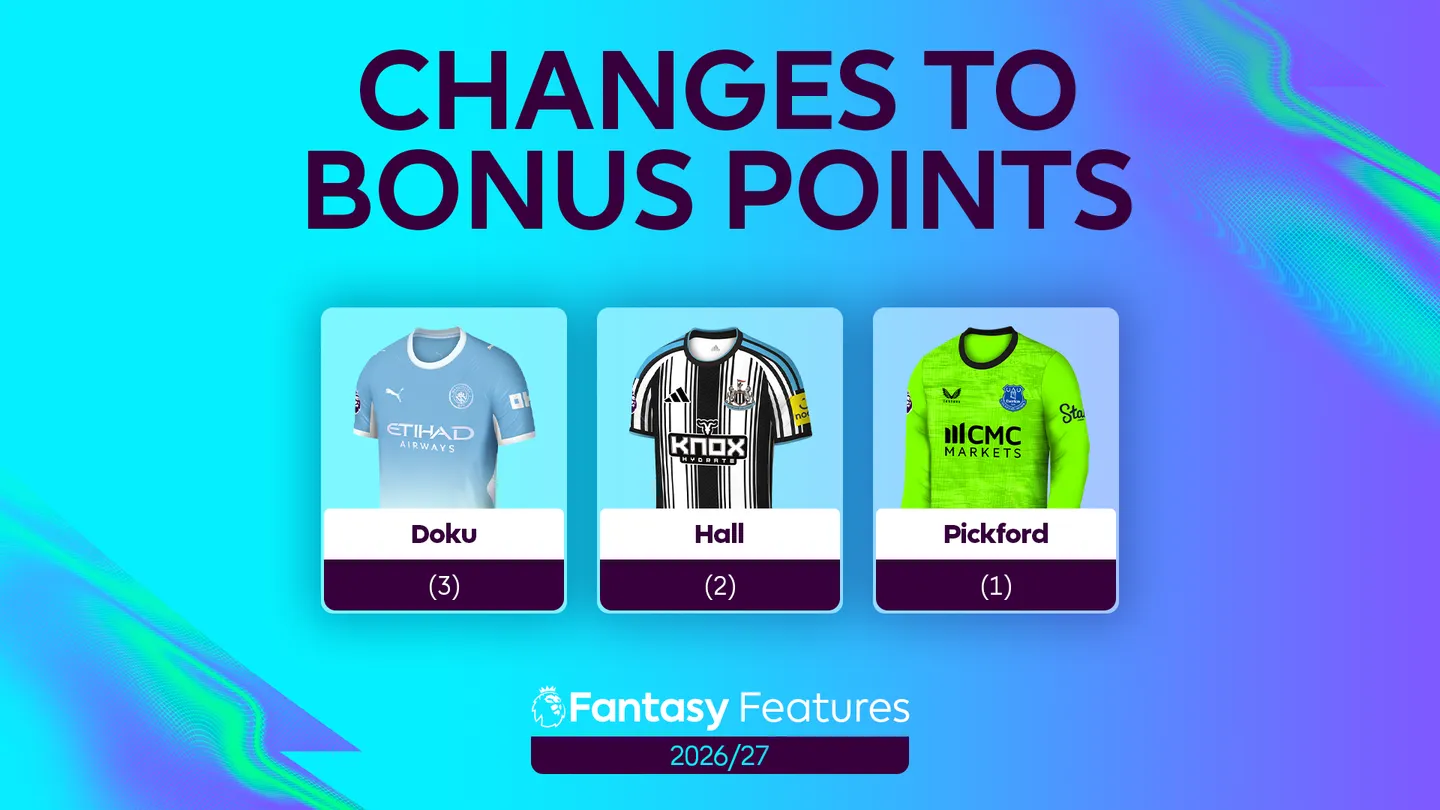
FPL bonus points are extra points awarded to the best-performing players in each Premier League match.
Usually, three players receive bonus:
- The best-performing player gets 3 bonus points.
- The second-best player gets 2 bonus points.
- The third-best player gets 1 bonus point.
These points are added to the player’s normal FPL score.
That means a defender who earns 6 points for a clean sheet and appearance can finish with 9 points after receiving three bonus points. A midfielder who scores and assists can add even more to an already strong total.
Bonus points do not replace goals, assists or clean sheets. They reward the wider contribution a player makes during the match.
How does the Bonus Points System work?
The Premier League uses the Bonus Points System, usually shortened to BPS.
BPS collects a range of match actions and turns them into a performance score. Players then rank against everyone else in the same match.
The system looks beyond the obvious moments.
A goal matters. An assist matters. But so do the smaller actions that help a team control a match.
This is why the best FPL bonus scorer is not always the player who scored the most goals.
A centre-back can dominate the bonus rankings in a low-scoring match. A full-back can score well without registering a goal or assist. A goalkeeper can earn bonus after making important saves and keeping his side in control.
The basic process is:
- Match actions create a BPS score.
- Players are ranked by their BPS total.
- The highest-ranked players receive 3, 2 and 1 bonus points.
- FPL adds those bonus points to each player’s final score.
What earns BPS points?
BPS rewards both attacking and defensive work.
The main positive actions include:
- Goals.
- Assists.
- Shots on target.
- Chances created.
- Big chances created.
- Successful dribbles.
- Accurate passes.
- Clearances.
- Blocks.
- Interceptions.
- Tackles.
- Recoveries.
- Saves.
- Playing a significant number of minutes.
- Clean sheets for defenders and goalkeepers.
The value of each action can vary. A goal will usually have a major effect, but a player can build a strong BPS score through many smaller contributions.
For example, a full-back might:
- Complete 45 passes.
- Make five recoveries.
- Win three tackles.
- Create two chances.
- Help keep a clean sheet.
He may not score or assist. However, his overall match performance can still place him among the top three players.
This is why looking only at goals and assists gives you an incomplete picture of a player’s FPL potential.
What reduces a player’s BPS score?
Players can also lose BPS for mistakes or negative actions.
These include:
- Conceding goals, particularly for defenders and goalkeepers.
- Yellow cards.
- Red cards.
- Own goals.
- Missing a big chance.
- Making an error that leads to a goal.
- Giving the ball away in damaging situations.
- Missing a penalty.
This helps explain why an attacking player can score but still miss out on bonus points.
A striker might score once but miss a clear chance, lose possession repeatedly and offer little outside the goal. A defender who keeps a clean sheet and contributes consistently may finish with a higher BPS score.
The system is not simply asking, “Who scored?”
It is asking, “Who had the strongest all-round match?”
How are FPL bonus points awarded?
The usual bonus structure is:
- 1st - 3pts
- 2nd - 2pts
- 3rd - 1pts
Ties can make the final result look unusual.
When players are level on BPS, the tie is settled using the relevant tie-break rules. Minutes played can separate players who finish level. Where players remain tied, the lowest BPS position among the tied players can affect how the remaining bonus point is awarded.
This means more than three players can sometimes receive bonus points. It also means a small difference in match involvement can change who receives the extra points.
You should not expect every match to produce a simple 3-2-1 result with three completely separate scores.
Why defenders can beat goalscorers

One of the most useful lessons in the FPL points system explained simply is that match context matters.
In a 4-3 thriller, attacking players often dominate the bonus points. There are goals, assists, shots and chances everywhere.
In a 1-0 match, the pattern can be very different.
The goalkeeper may make several saves. The centre-backs may clear danger repeatedly. A full-back may win tackles, recover possession and help his team protect the lead.
A goalscorer could still receive bonus. But a defender with a clean sheet and a busy, effective performance may finish higher in the BPS rankings.
This is why defenders can be more attractive in matches where:
- Their team has a good chance of a clean sheet.
- The opponent is likely to attack.
- The defender makes regular tackles and interceptions.
- The full-back contributes passes and chances.
- The player is likely to complete the full match.
A quiet centre-back in a dominant 4-0 win may not always collect bonus. A busy defender in a hard-fought 1-0 win might.
Which players are bonus-friendly?
Bonus-friendly players tend to contribute in several areas rather than relying on one action.
Look for players who:
- Play 60 minutes or more regularly.
- Stay involved when their team does not score many goals.
- Complete a high number of passes.
- Create chances.
- Take shots on target.
- Make tackles and recoveries.
- Keep their discipline.
- Avoid frequent mistakes.
- Have a secure starting place.
Full-backs often attract attention because they can contribute at both ends of the pitch. They can earn defensive BPS through tackles and interceptions, then add attacking value through crosses, key passes and shots.
Ball-playing centre-backs can also be useful. Their passing, clearances, blocks and clean-sheet potential give them several routes to a strong BPS score.
Midfielders who create chances and remain involved for 90 minutes can also collect bonus even when they do not score.
By contrast, card magnets carry extra risk. A player who regularly picks up yellow cards may lose BPS even when he has played well.
How can FPL player stats help?
You cannot predict bonus points perfectly. However, the right statistics can help you estimate a player’s potential.
Start with these areas:
Expected goals data
Expected goals, or xG, estimates the quality of the chances a player receives.
A high xG suggests that a player is regularly getting into promising scoring positions. This improves his chance of earning attacking points and bonus.
It does not guarantee a goal. It simply shows the quality and number of chances behind the recent returns.
Chances created
Chances created can point to bonus potential for midfielders and full-backs.
A player who creates several chances can build BPS even if teammates fail to score. This makes creative players more useful than a simple goals-and-assists table may suggest.
Form
An FPL form guide can help you see whether a player is consistently involved.
Look for more than recent points. Check:
- Minutes played.
- Shots.
- Shots on target.
- Chances created.
- Touches in the penalty area.
- Defensive actions.
- Recent BPS scores.
A player with steady involvement may be a better bonus candidate than someone who produced one large score from a single goal.
Fixture difficulty
The fixture affects the type of BPS performance you might expect.
A strong attacking fixture may create more chances for forwards and midfielders. A competitive match may offer more defensive actions for full-backs and centre-backs.
Use fixture information as a guide, not a promise. Football matches do not always follow the expected script.
A simple captaincy example
Imagine you are choosing between two captain options.
Player A is an attacking midfielder:
- Scores one goal.
- Creates two chances.
- Plays 90 minutes.
- Receives 2 bonus points.
- Finishes with 9 FPL points.
Player B is a forward:
- Scores twice.
- Misses a big chance.
- Plays 75 minutes.
- Receives 1 bonus point.
- Finishes with 13 FPL points.
As captain, the difference becomes larger:
- Player A: 18 points.
- Player B: 26 points.
Now imagine Player A had been the more popular captain across your mini league. A strong performance from Player B could create a significant swing.
The bonus point itself did not decide the entire result. But it added two extra points before captaincy was doubled. That became four points in the captain comparison.
Small margins become important over 38 Gameweeks.
Before the deadline, you can use a tool such as Rate My Team to compare captain options alongside fixture difficulty, form and expected attacking involvement. The answer should support your decision, not make it for you.
How bonus points affect mini leagues
Bonus points matter most when you are close to a rival.
A defender owned by 5% of managers may score:
- 2 points for playing.
- 4 points for a clean sheet.
- 3 bonus points.
That is a 9-point return before any attacking contribution.
If your rival owns him and you do not, the difference can be hard to recover in one Gameweek. If you captain a player who earns bonus, the gap can grow again.
This is why you should review bonus trends after each Gameweek. A Gameweek Recap can help you understand which players earned extra points and whether the result came from goals, clean sheets, bonus or a surprise performance.
The aim is not to chase every bonus scorer. It is to understand why the points were awarded.
Can you predict FPL bonus points?
You can estimate bonus potential, but you cannot predict it with certainty.
BPS depends on the details of a live football match. A single missed chance, late tackle or important save can change the rankings.
Use the following process:
- Check the player’s expected minutes.
- Review recent BPS scores.
- Look at xG, shots and chances created.
- Check defensive actions for defenders.
- Consider the fixture and likely match pattern.
- Avoid players with regular cards or errors.
- Compare the full picture rather than one statistic.
Our FPL Gameweek Tips can help you organise these checks before the deadline. But no model or prediction can guarantee bonus points.
The main lesson
FPL bonus points reward more than goals and assists.
They recognise players who influence a match through attacking actions, defensive work, passing, recovery, saves and overall involvement. A clean-sheet defender can beat a goalscorer. A creative midfielder can earn bonus without scoring. A single yellow card can remove an advantage.
So, when you are making transfers or choosing a captain, do not ask only:
> “Who is most likely to score?”
Also ask:
> “Who is likely to stay involved throughout the match?”
That question will help you understand how FPL works, read the FPL rules explained in the right context and use the FPL scoring system more effectively.
Check the numbers. Consider the fixture. Review the player’s role. Then make your decision with realistic expectations.
Bonus points can quietly change a Gameweek. Understanding them gives you a clearer way to respond when they do.