
Who is Arsenal’s greatest player ever? Ask ten supporters and you may get ten passionate answers. One fan will choose Thierry Henry. Another will point to Tony Adams. Someone else will argue that Dennis Bergkamp changed the club more than any forward before him.
That is what makes this list so difficult. Arsenal have won 14 English league titles and a record 14 FA Cups, with great players appearing in almost every generation. The club’s history is not one straight road. It is a long red-and-white thread, running from Herbert Chapman’s champions to Arsène Wenger’s Invincibles and, now, Mikel Arteta’s modern title winners.
I have ranked these 20 players by a mixture of ability, Arsenal legacy, consistency, silverware, influence and the feeling they left behind. For current records and player context, Arsenal’s official history pages and the Premier League’s player archive are useful starting points. You can also compare the club’s current players through Metro Football’s Arsenal player page.
The order is subjective, but the standards are not. Every player here changed Arsenal in a meaningful way.
How I Picked My 20 (and Why Rankings Always Start Arguments)
What I counted
I considered five things: peak ability, Arsenal appearances, goals or assists, trophies and influence on important teams.
That does not mean the player with the most goals automatically wins. A goalkeeper cannot be judged like a striker, and a defender’s value rarely appears in a simple scoring column. David O’Leary’s 722 appearances tell one story. Henry’s 228 goals tell another.
I also considered the player’s importance to a particular era. Alexis Sánchez did not spend as long at Arsenal as David O’Leary, but his best football was electric. He often looked like a one-man storm, dragging matches towards Arsenal through effort and inspiration.
What I deliberately left out
This is not a list of the 20 most talented footballers to wear the shirt for a short period. It is a ranking of Arsenal careers.
That explains why some brilliant players miss out. Robin van Persie scored 132 Arsenal goals, according to the club’s record listings, but his Arsenal story ended before he reached the same level of lasting legacy as several players below him.
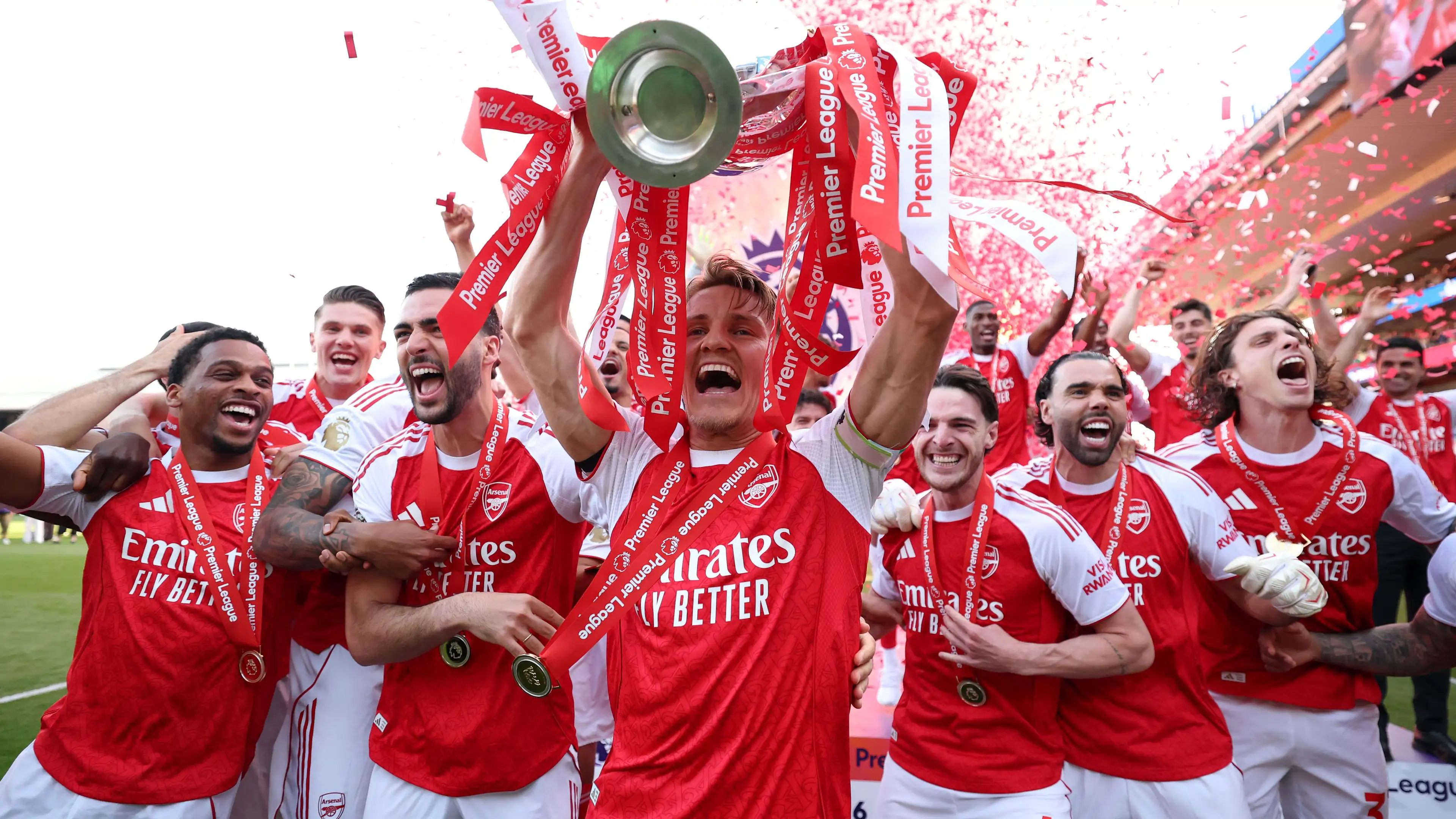
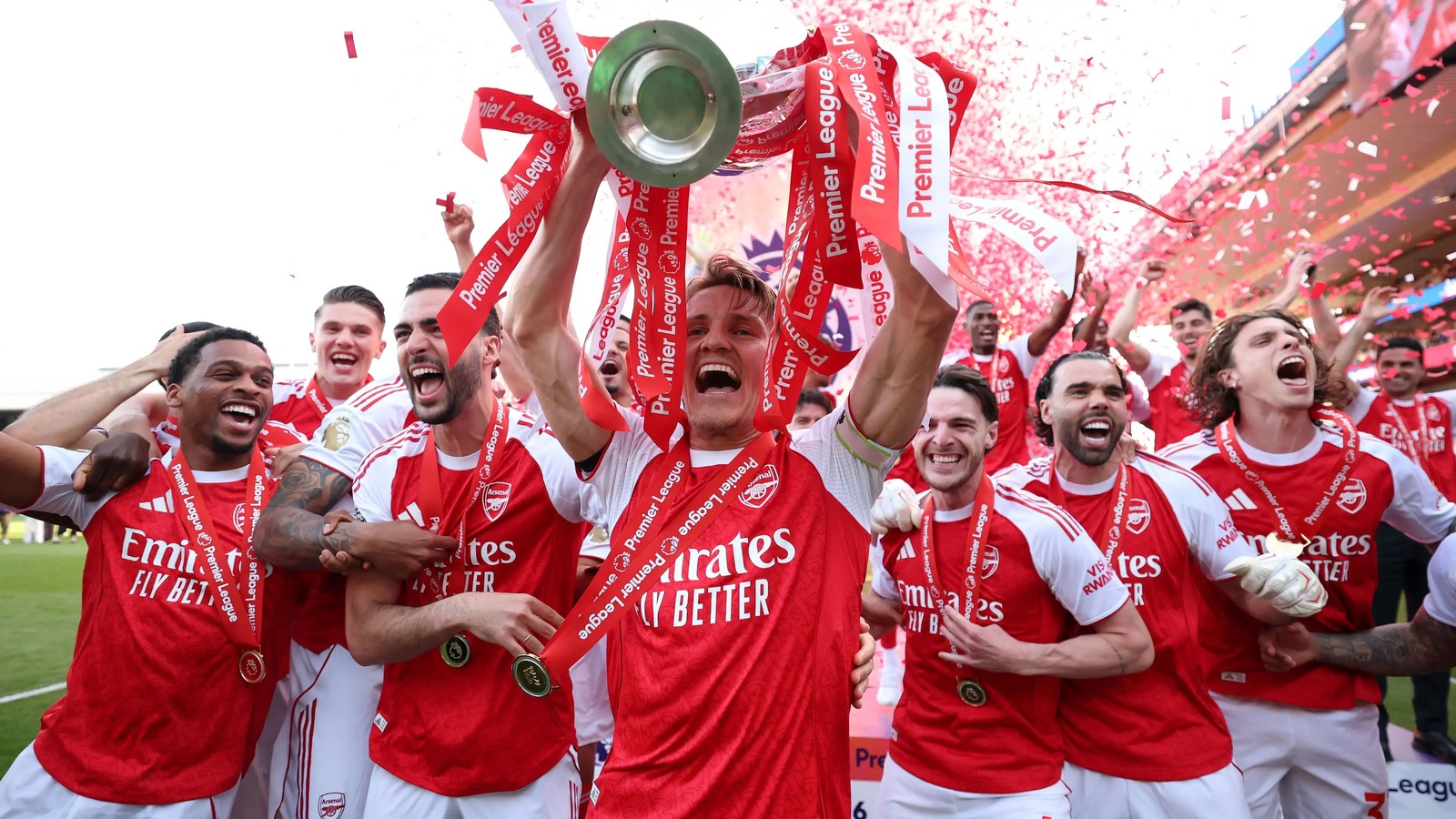
I have also avoided pretending that modern players have finished their stories. Bukayo Saka and Martin Ødegaard are already worthy of the list, especially after the 2025/26 title, but both can still climb.
Arsenal's Greatest Players at a Glance (Table 1)
Please swipe the table to see stats if you're using a mobile device.
| Rank | Player | Position | Arsenal years | Key stat |
|---|---|---|---|---|
| 1 | Thierry Henry | Forward | 1999–2007, 2012 | 228 goals |
| 2 | Dennis Bergkamp | Forward | 1995–2006 | 423 appearances |
| 3 | Tony Adams | Centre-back | 1983–2002 | 669 appearances |
| 4 | Patrick Vieira | Midfielder | 1996–2005 | 3 league titles, 4 FA Cups |
| 5 | Ian Wright | Forward | 1991–1998, 2000 | 185 goals |
| 6 | Robert Pires | Midfielder | 2000–2006 | 84 goals |
| 7 | Liam Brady | Midfielder | 1973–1980, 1983–1984 | FA Cup winner |
| 8 | David Seaman | Goalkeeper | 1990–2003 | 564 appearances |
| 9 | Sol Campbell | Centre-back | 2001–2006, 2010 | Five major trophies |
| 10 | Cesc Fàbregas | Midfielder | 2003–2011 | 35 Premier League goals |
| 11 | Freddie Ljungberg | Midfielder | 1998–2007 | 72 goals |
| 12 | Ashley Cole | Left-back | 1997–2006 | 228 appearances |
| 13 | Cliff Bastin | Forward | 1929–1947 | 178 goals |
| 14 | David O'Leary | Centre-back | 1975–1993 | 722 appearances |
| 15 | Charlie George | Forward | 1969–1975, 1977–1978 | 1971 FA Cup hero |
| 16 | Alexis Sánchez | Forward | 2014–2018 | 60 Premier League goals |
| 17 | Mesut Özil | Midfielder | 2013–2021 | 50 Premier League assists |
| 18 | Pierre-Emerick Aubameyang | Forward | 2018–2022 | 69 Premier League goals |
| 19 | Bukayo Saka | Winger | 2018–present | 2025/26 title winner |
| 20 | Martin Ødegaard | Midfielder | 2021–present | 2025/26 title-winning captain |
How to read the table
The years show a player’s main Arsenal spell, while the key stat gives one quick reason for their place. Some figures cover all competitions and others cover the Premier League because that is how the available official records are commonly listed.
Why the numbers only take you so far
Statistics can show scale, but they cannot fully explain memory. They will not tell you how Bergkamp’s first touch made a difficult ball look simple, or why Adams seemed to make an entire defence believe it could survive anything.
That is why this ranking combines numbers with context.
1-4: The Untouchables

Thierry Henry: the greatest of them all
Henry is Arsenal’s number one. It is not an outrageous choice; it is the most natural conclusion.
He arrived in 1999 as a quick but inconsistent winger. Arsène Wenger moved him towards the centre, and football suddenly gained a new problem. Henry could run beyond defenders, drift left, create chances, finish calmly or strike from distance. He was not just a goalscorer. He was Arsenal’s attacking system in human form.
The numbers behind the legend
Henry scored 228 goals in 377 Arsenal appearances, making him the club’s all-time record goalscorer. He broke Ian Wright’s record on 18 October 2005 with two goals against Sparta Prague in the Champions League.
He won two league titles and three FA Cups with Arsenal. The 2003/04 Invincibles season was his masterpiece, but his wider contribution matters just as much. He was the captain, the creator and the player opponents feared before kick-off.
Dennis Bergkamp: the artist who changed the club
Bergkamp brought control to Arsenal’s attack. His football was built on touch, timing and imagination. If Henry was a blade, Bergkamp was the hand guiding it.
He made 423 appearances, scored 120 goals and won three league titles and four FA Cups. More importantly, he helped change what Arsenal looked like. The club became more technical, more patient and more inventive.
His goal against Newcastle in 2002 remains a perfect example. One touch sent the defender the wrong way; the next sent the ball into the net. It was less like a dribble and more like a magic trick.
Tony Adams: the captain who grew up in front of us
Adams joined Arsenal as a teenager and became the club’s defining captain. His career covered the old First Division, the Premier League and the tactical revolution brought by Wenger.
He made 669 appearances, second only to David O’Leary among Arsenal players. Adams led with positioning, courage and clear instructions. He was never interested in looking elegant for its own sake. He wanted the ball cleared, the line organised and the match won.
Tony Adams was not simply a great Arsenal defender; he became part of the club’s identity.
Patrick Vieira: the engine of the Invincibles
Vieira gave Arsenal power in midfield. He could win the ball, carry it forward, arrive in the box and intimidate opponents without losing his technical quality.
As captain, he led the Invincibles through the unbeaten 2003/04 Premier League season. He won three Premier League titles with Arsenal, in 1997/98, 2001/02 and 2003/04, as well as four FA Cups in 1998, 2002, 2003 and 2005. Arsenal went 49 league matches without defeat between May 2003 and October 2004, recording 36 wins and 13 draws. The run ended in a 2–0 defeat to Manchester United on 24 October 2004.
Vieira was the engine, but he was also the temperature gauge. When Arsenal needed calm, he slowed the game. When they needed force, he raised the pressure.
5-8: The Men Who Won the Titles
Ian Wright: the record breaker who waited
Wright scored with joy. His celebrations were as recognisable as his finishing, and his energy made him easy to love.
He scored 185 goals in 288 appearances, a record that stood until Henry passed him. Wright’s movement was sharp, his finishing instinctive and his personality enormous. He brought urgency to Arsenal’s attack before the Wenger era became associated with technical beauty.
He was also an important bridge between generations. Wright won the title in 1997/98 and helped Arsenal become a club capable of mixing emotion with discipline.
Robert Pires: silk on the left wing
Pires seemed to glide rather than run. He made the left side of Arsenal’s attack feel spacious, even when defenders knew exactly where he wanted to go.
He scored 84 goals in 284 appearances and won two league titles and three FA Cups. His partnership with Henry was one of the great attacking relationships of the Premier League era. Pires could finish, cross, combine or arrive late in the area.
His influence was not always loud. Often, it was a smooth turn, a clever pass and a defender left chasing shadows.
Liam Brady: the classiest left foot of his generation
Brady belongs to an earlier Arsenal, but his reputation has travelled well. He was technically gifted, composed and capable of seeing passes before everyone else.
His left foot gave Arsenal a different rhythm. He could escape pressure with a touch and open a defence with a pass that seemed to arrive from another angle. Brady was part of the 1979 FA Cup-winning side and became one of the club’s most admired academy products.
David Seaman: the safest pair of hands
A great goalkeeper can make difficult saves look routine. Seaman did exactly that.
He made 564 appearances for Arsenal and won 10 major trophies. His positioning was excellent, but his value went beyond saves. Seaman gave Arsenal’s defenders confidence. They knew he would command crosses, organise the box and remain calm when the match became frantic.
His famous late save against Sheffield United in the 2003 FA Cup semi-final was a reminder that even the calmest goalkeeper can produce something extraordinary.
9-12: Invincibles and the Bridge Years
Sol Campbell: the transfer that shook north London
Campbell’s move from Tottenham to Arsenal created instant noise. He then made the perfect response on the pitch.
He made 211 Arsenal appearances and won five major trophies. Campbell scored in the 2002/03 FA Cup final and played a central role in the Invincibles defence. Strong in the air and composed in possession, he gave Arsenal an authority at the back.
The transfer mattered, but the football mattered more. Campbell became an Arsenal winner.
Cesc Fàbregas: the boy who ran the midfield
Fàbregas was still a teenager when he began influencing Arsenal matches. His passing was direct, brave and unusually mature.
He made 212 Premier League appearances for Arsenal and scored 35 league goals. When Vieira left, Fàbregas helped carry the creative responsibility in midfield. His best performances showed a player capable of controlling the game without needing to dominate physically.
He was not the finished article when he left, but his Arsenal peak was too important to ignore.
Freddie Ljungberg: the man for the big moments
Ljungberg understood timing. He arrived late, attacked space and often appeared exactly where Arsenal needed him.
He made 328 appearances, scored 72 goals and won two league titles and three FA Cups. His red hair became a familiar sight during Arsenal’s best years, particularly when he was sprinting into the penalty area.
Ljungberg’s goals were not always spectacular. They were often better than spectacular: they were useful.
Ashley Cole: the best left-back of his era
Cole combined pace, stamina and defensive intelligence. He could track a winger for 90 minutes and still support the attack late in the match.
He made 228 competitive Arsenal appearances, won two Premier League titles and three FA Cups, and gave the side balance on both sides of the ball.
His Arsenal career ended in difficult circumstances, but that should not erase his football. He was a key member of the Invincibles and one of the most complete full-backs of his generation.
13-16: Pioneers and Entertainers

Cliff Bastin: the record that stood for 60 years
Bastin scored 178 goals in 396 appearances and was Arsenal’s leading goalscorer for decades. His record survived changes in tactics, competition and football culture before Wright and Henry finally moved beyond it.
He was a key part of Herbert Chapman’s successful Arsenal side. Bastin offered finishing, intelligence and consistency from the left side of the attack.
David O'Leary: the quiet record holder
O’Leary holds Arsenal’s all-time appearance record with 722 competitive games between 1975 and 1993. He passed George Armstrong’s previous record of 621 appearances in November 1989.
His game was based on reading danger early. O’Leary did not need to make every tackle look dramatic. He often solved the problem before it became visible.
Charlie George: the local hero who made 1971
George was the hero of the 1971 FA Cup final, scoring one of the most famous goals in Arsenal history against Liverpool.
He represented the emotional side of the club: local, expressive and fearless. His long hair and rebellious style made him memorable, but his football gave that image substance.
Alexis Sánchez: the last true superstar before the rebuild
Sánchez played with relentless force. He pressed, dribbled, tackled and shot as if every match had become personal.
He scored 60 Premier League goals in 122 appearances for Arsenal. His best seasons were spectacular, especially when Arsenal needed an individual to break open a tight match.
The club’s later rebuild made his period feel like the end of one chapter. He was Arsenal’s last global superstar before the team began constructing something younger and more balanced.
17-20: The Modern Era
Mesut Özil: the assist king
Özil’s best football was built on vision. He could see a pass before the defence understood the danger.
He recorded 33 goals and 50 assists in 184 Premier League matches for Arsenal. His critics wanted more goals and defensive effort, but his supporters saw a creator who could unlock a deep defence with one pass.
He belongs on this list because Arsenal supporters did not simply watch him play. They watched the space around him, waiting for the next opening.
Pierre-Emerick Aubameyang: goals, and a FA Cup
Aubameyang gave Arsenal speed behind the defence and a reliable finishing option. He scored 69 Premier League goals in 143 appearances for the club.
His finest Arsenal moment came in the 2020 FA Cup final, when he scored twice against Chelsea. That performance turned a difficult season into a trophy-winning one.
Bukayo Saka: the academy jewel
Saka has grown from promising academy player into one of Arsenal’s most important senior figures. He offers goals, assists, work rate and the ability to take responsibility when matches become tense.
The 2025/26 title strengthens his place in this list. Still, his ranking comes with a clear warning: Saka is not finished yet. A longer career and more trophies could push him much higher.
Martin Ødegaard: the captain who lifted the title
Ødegaard brings control and imagination to Arsenal’s midfield. He connects the press, carries the ball into dangerous areas and gives the attack a clear direction.
Please swipe the table to see stats if you're using a mobile device.
| Rank | Player | Position | Appearances | Goals | Trophies |
|---|---|---|---|---|---|
| 1 | Thierry Henry | Forward | 377 | 228 | 2 league titles, 3 FA Cups |
| 2 | Dennis Bergkamp | Forward | 423 | 120 | 3 league titles, 4 FA Cups |
| 3 | Tony Adams | Centre-back | 669 | - | 2 league titles, 2 FA Cups |
| 4 | Patrick Vieira | Midfielder | 405 | 32 | 3 league titles, 4 FA Cups |
| 5 | Ian Wright | Forward | 288 | 185 | Major league and cup honours |
| 6 | Robert Pires | Midfielder | 284 | 84 | 2 league titles, 3 FA Cups |
| 7 | Liam Brady | Midfielder | 307 | 59 | FA Cup winner (1979) |
| 8 | David Seaman | Goalkeeper | 564 | - | 10 major trophies |
| 9 | Sol Campbell | Centre-back | 211 | - | 2 league titles, 3 FA Cups |
| 10 | Cesc Fàbregas | Midfielder | 212 PL appearances | 35 PL goals | FA Cup winner (2005) |
| 11 | Freddie Ljungberg | Midfielder | 328 | 72 | 2 league titles, 3 FA Cups |
| 12 | Ashley Cole | Left-back | 228 | - | 2 league titles, 3 FA Cups |
| 13 | Cliff Bastin | Forward | 300 | 178 | 5 league titles, 2 FA Cups |
| 14 | David O'Leary | Centre-backv | 722 | - | Major league and cup honours |
| 15 | Charlie George | Forward | 179 | 49 | League and FA Cup winner (1971) |
| 16 | Alexis Sánchez | Forward | 122 PL appearances | 60 PL goals | FA Cup winner |
| 17 | Mesut Özil | Midfielder | 184 PL appearances | 33 PL goals | 4 FA Cups |
| 18 | Pierre-Emerick Aubameyang | Forward | 143 PL appearances | 69 PL goals | FA Cup winner |
| 19 | Bukayo Saka | Winger | - | - | 2025/26 Premier League title |
| 20 | Martin Ødegaard | Midfielder | - | - | 2025/26 Premier League title |
A dash means the all-competition figure is not verified in the sources used for this article, and this ranking deliberately avoids inventing statistics.
What the second table shows
The table separates all-competition totals from Premier League figures where the available record is competition-specific. It also avoids creating false precision around players whose complete totals are not included in the verified data used for this article. For current players such as Saka and Ødegaard, the missing all-competition totals reflect an editorial choice not to guess at figures that are still moving.
For the historical records, Arsenal’s official records and the Wikipedia record summary provide useful reference points. For Premier League figures, StatMuse and PremierLeague.com can help you check the competition-only numbers.
How to use it in an argument with your mates
Start with the category. Are you arguing about the best player, the best Arsenal career or the most influential player? Those are three different debates.
Henry wins the overall argument for many supporters. O’Leary wins the longevity argument. Bergkamp may win the pure football argument. Adams wins the leadership argument. There is no shame in admitting that the answer changes with the question.
The Honourable Mentions
Unlucky to miss out
Robin van Persie is the obvious omission. His 132 Arsenal goals place him eighth on the club’s all-time list, but injuries and the way his Arsenal career ended keep him outside this particular top 20.
George Armstrong, Lee Dixon, Nigel Winterburn, Lauren, Gilberto Silva, Ray Parlour and Martin Keown also deserve serious consideration. The competition is fierce, especially among defenders and midfielders.
The next generation knocking on the door
The current Arsenal squad could change this ranking quickly. Saka and Ødegaard are already here, while other title winners may build cases of their own.
A player does not become an all-time great after one successful season. But a title can be the first heavy stone in a very strong foundation.
Which Arsenal Era Was Actually the Strongest?
The 1930s versus the Wenger years
The 1930s team set the foundation for Arsenal’s national reputation. Chapman’s side introduced tactical organisation, elite fitness and a winning mentality.
The Wenger years changed the club again. The 2003/04 Invincibles went unbeaten through a Premier League season and then extended the run to 49 matches. The combination of technical quality, physical strength and attacking movement was exceptional.
If you value innovation and historical importance, the 1930s have a strong case. If you value the quality of opposition and modern tactical demands, the Invincibles are difficult to beat.
Why the 2025/26 side deserves its place in the conversation
The 2025/26 team won the Premier League with the best defensive record in the division and ended Arsenal’s 22-year wait for the title. Arsenal conceded just 27 goals in 38 matches and kept 19 clean sheets. The club confirmed the championship on 19 May 2026 after Manchester City drew 1–1 with Bournemouth, as reported by Arsenal.com.
It is too early to call the side Arsenal’s best ever. However, it deserves recognition as one of the club’s most important teams because it completed a long rebuild and restored belief.
How the 2025/26 Title Changes the Debate
A 22-year wait, finally over
Winning the title changes how supporters remember a generation. Before 2025/26, Arsenal’s modern story was often framed around near misses, strong cup runs and three consecutive second-place finishes.
Now the players have the medal that proves the project reached its main target. That does not make every current player an all-time great, but it gives their careers a stronger platform.
Where the current squad fits historically
Saka and Ødegaard are the clearest candidates for this list because they combine technical quality with leadership and title-winning importance.
They are not yet above Henry, Bergkamp, Adams or Vieira. That would be premature. But history is not a museum where the doors are locked. If Saka continues producing and Ødegaard leads more successful seasons, both can move sharply upwards.
Final Thoughts
The best Arsenal player of all time is Thierry Henry, but the club’s greatness has never depended on one player alone. Bergkamp supplied imagination, Adams supplied leadership, Vieira supplied force and O’Leary supplied extraordinary longevity. The current generation now has its own title, and that means Saka and Ødegaard can begin building a new section of Arsenal history. The ranking will always create arguments, but that is part of what makes Arsenal’s past so rich.
FAQs
Who is Arsenal's all-time top scorer?
Thierry Henry is Arsenal’s all-time leading goalscorer with 228 goals in 377 appearances. He passed Ian Wright’s previous record in October 2005 during a Champions League match against Sparta Prague.
Who has made the most appearances for Arsenal?
David O’Leary holds the record with 722 competitive appearances between 1975 and 1993. Tony Adams is second with 669 appearances, while George Armstrong, Lee Dixon and Nigel Winterburn also sit among the club’s leading appearance makers.
Was Thierry Henry better than Dennis Bergkamp?
For overall output and influence, Henry has the stronger case. He scored more goals and became Arsenal’s record scorer. Bergkamp, however, changed the technical style of the team and offered a level of creativity that makes the comparison extremely close.
Who was Arsenal's best captain?
Tony Adams is the traditional answer because he captained Arsenal across multiple successful eras. Patrick Vieira also has a strong claim after leading the Invincibles. The choice depends on whether you value longevity, defensive leadership or peak achievement.
Who is the best Arsenal player of the Premier League era?
Thierry Henry is the strongest choice. His goals, assists, trophies and influence made him the defining Arsenal player of the Premier League period. Bergkamp, Vieira and Adams are the closest challengers.
Which Arsenal team was the best ever?
The 2003/04 Invincibles are the leading answer because they won the Premier League without losing a match. They also extended their unbeaten league run to 49 games, a record that remains central to Arsenal’s identity.
Who is Arsenal's best current player?
Bukayo Saka has the strongest claim because he combines consistent attacking output, academy status and big-match responsibility. Martin Ødegaard is close behind because of his role as captain and creative leader in the 2025/26 title-winning side.
Did Arsenal ever win the Champions League?
No. Arsenal reached the Champions League final in 2006 and lost to Barcelona. They also reached the 2026 final on 30 May 2026, drew 1–1 with Paris Saint-Germain after extra time and lost 4–3 on penalties. Kai Havertz scored for Arsenal, according to Arsenal.com’s official match report.
Who was Arsenal's greatest goalkeeper?
Rank