
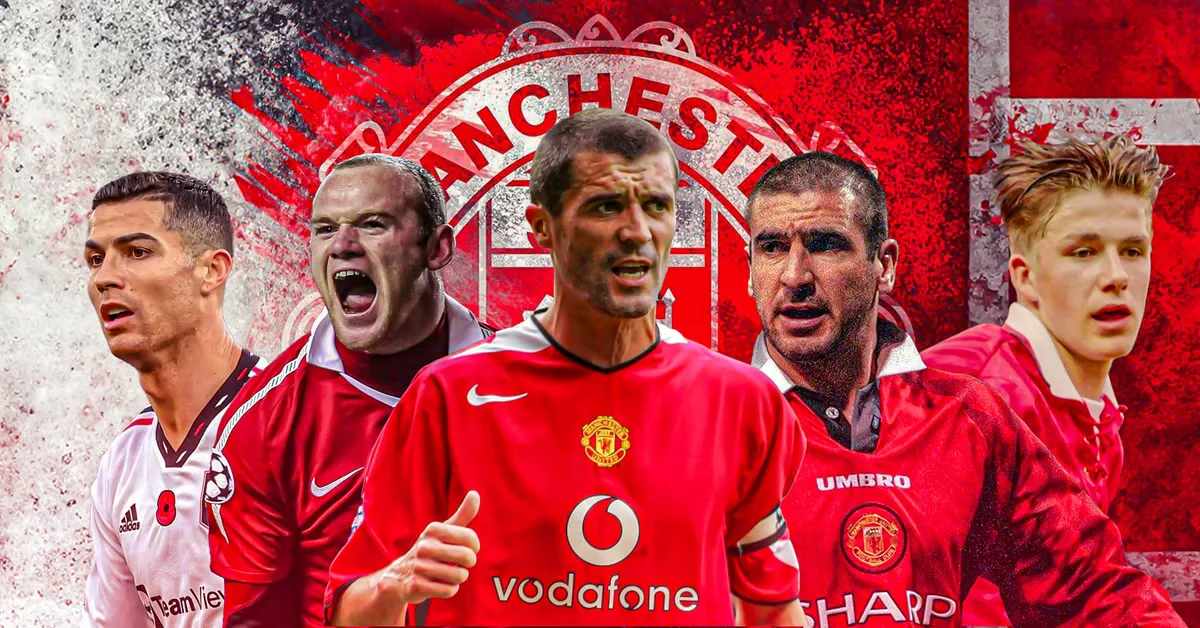
This is a historical football article and opinion-led comparison of the 20 best Manchester United players of all time. It combines Manchester United player records, major honours, longevity, influence and memorable moments across different eras.
The ranking and statistics are based on the supplied verified facts, Manchester United’s official history, the club’s records and statistics, Wikipedia’s Manchester United records page, FourFourTwo and other established football sources. Where a figure is uncertain, the article describes the achievement without adding an unverified number.
A dash is used where the supplied facts do not provide a reliable figure. The table focuses on comparison rather than pretending that every historical record is perfectly consistent.
How This Ranking Works (and Why It Always Starts an Argument)
Ranking Manchester United’s greatest players is a little like choosing the best song from a band with six decades of hits. You can make a strong case for several answers, but someone will still object to the order.
I have ranked these players using four main tests: ability, influence, longevity and contribution to Manchester United’s biggest moments. Goals and trophies matter, but they do not tell the whole story. A goalkeeper can dominate without scoring. A midfielder can control matches without collecting headlines. A short spell can also change the direction of a club.
United have won 20 league titles, 13 FA Cups and three European Cups. The club’s history stretches from the early Busby years to the Ferguson era and beyond, so comparing players across generations is never perfectly fair. The club’s records and statistics provide the numbers, while memory helps explain their meaning.
What I counted
I considered what each player did in a Manchester United shirt. That includes their best performances, their importance to successful teams, their consistency and the way supporters remember them.
I also considered context. George Best played in a different footballing world from Cristiano Ronaldo. Jack Rowley’s records came in a much earlier era. Their numbers should not be placed on a simple modern scale.
What I deliberately left out
I have not ranked managers, academy graduates who made only brief senior contributions or players whose greatest work came elsewhere. International careers also carry limited weight here.
This is a Manchester United ranking first. It is not a list of the greatest footballers ever, and it is not based only on reputation.
| Rank | Player | Position | United years | Key stat |
|---|---|---|---|---|
| 1 | Ryan Giggs | Winger/midfielder | 1991–2014 | 963 appearances, 13 league titles |
| 2 | Sir Bobby Charlton | Midfielder/forward | 1956–1973 | 758 appearances, 249 goals |
| 3 | George Best | Winger/forward | 1963–1974 | 470 appearances, 179 goals, Ballon d'Or winner |
| 4 | Wayne Rooney | Forward | 2004–2017 | Club-record 253 goals |
| 5 | Eric Cantona | Forward | 1992–1997 | 185 goals |
| 6 | Paul Scholes | Midfielder | 1994–2013 | 84 goals |
| 7 | Roy Keane | Midfielder | 1993–2005 | FA Cup winner |
| 8 | Cristiano Ronaldo | Winger/forward | 2003–2009 | 118 goals in first United spell, Ballon d'Or winner |
| 9 | Peter Schmeichel | Goalkeeper | 1991–1999 | 15 trophies |
| 10 | Denis Law | Forward | 1962–1973 | 237 goals |
| 11 | Bryan Robson | Midfielder | 1981–1994 | 10 major honours |
| 12 | Nemanja Vidic | Defender | 2006–2014 | 15 trophies |
| 13 | Rio Ferdinand | Defender | 2002–2014 | 455 appearances |
| 14 | David Beckham | Midfielder | 1992–2003 | 394 appearances, 85 goals |
| 15 | Ruud van Nistelrooy | Forward | 2001–2006 | 150 goals in 219 appearances |
| 16 | Duncan Edwards | Midfielder | 1952–1958 | 177 appearances |
| 17 | David de Gea | Goalkeeper | 2011–2023 | Club-record 189 clean sheets |
| 18 | Ole Gunnar Solskjaer | Forward | 1996–2007 | 1999 Champions League winner |
| 19 | Jack Rowley | Forward | 1937–1955 | 211 goals |
| 20 | Bruno Fernandes | Midfielder | 2020–present | Over 100 goals for United |
How to read the table
The order is not a mathematical formula. Giggs is first because he combined extraordinary longevity with elite production and an unmatched collection of honours. Charlton and Best follow because they shaped one of the club’s most important eras.
At the other end, Bruno Fernandes remains active, so his position is necessarily provisional. His United story is still being written.
Why the numbers only take you so far
A goals total cannot show Cantona’s influence on a young Ferguson team. An appearance record cannot fully explain Scholes’ control of midfield. A clean-sheet record does not capture how many difficult matches David de Gea kept alive.
Statistics help us start the conversation. They cannot finish it.
1-4: The Immortals
Ryan Giggs: the record that may never be broken
Ryan Giggs is the safest choice at number one because his career covers almost the entire modern history of Manchester United. He made 963 competitive appearances between 1991 and 2014 and scored 168 goals.
He was not simply a survivor who stayed around after his best years. Giggs changed his game. He began as a thrilling left winger, then became a more measured midfielder who could still influence important matches. His 13 Premier League titles and two Champions League victories underline his importance to the most successful period in the club’s history.
The numbers behind the record
Giggs passed Sir Bobby Charlton’s previous appearance record of 758 on 21 May 2008. That moment captured his remarkable durability, but the record alone is not why he tops the list. He remained useful, decisive and trusted across several generations of teammates.
Sir Bobby Charlton: the soul of the club
Charlton was elegance with a powerful engine underneath. He made 758 appearances and scored 249 goals, numbers that stood as United records for decades.
His career also carries enormous historical weight. He survived the Munich air disaster and helped lead United back to the summit. In the 1968 European Cup final against Benfica, he scored twice in a 4–1 victory after extra time. He was not just one of United’s greatest players; he became a symbol of the club’s resilience.
George Best: the genius who came too soon
George Best was football played with the handbrake removed. He could glide past defenders, change direction in a heartbeat and make difficult skills look almost careless.
Best made 470 appearances and scored 179 goals. He won the 1968 European Cup and the Ballon d’Or in the same year. His career did not last as long as Giggs’ or Charlton’s, but his peak was breathtaking.
Was he the most talented player United ever had? Many supporters would say yes. Best made football look less like a system and more like an improvisation.
Wayne Rooney: the record goalscorer
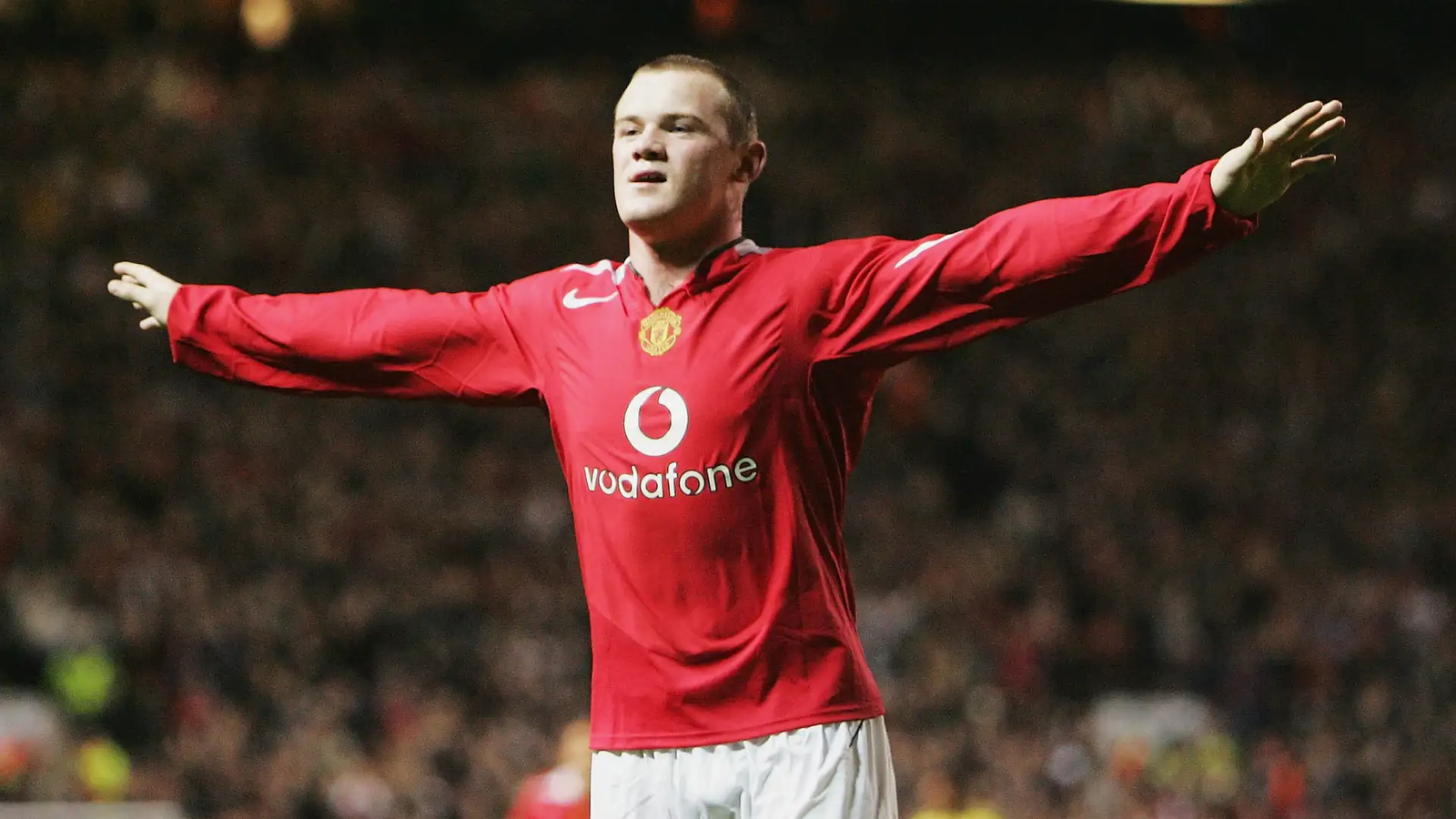
Wayne Rooney is Manchester United’s all-time record goalscorer, with 253 goals in 559 appearances between 2004 and 2017. He broke Charlton’s record of 249 with an injury-time free-kick against Stoke City on 21 January 2017.
Rooney was much more than a striker. He could lead the line, play behind the forward, drift wide, tackle and create. He gave United energy in almost every area of the pitch.
5-8: The Men Who Built the Modern Era
Eric Cantona: the catalyst
Cantona arrived when United needed belief as much as goals. He gave Ferguson’s team imagination, authority and a sense that success was expected rather than hoped for.
He made 185 appearances, scored 82 goals and won eight trophies. His contribution was not only statistical. Cantona helped set the tone for the Premier League era, and his technique allowed the players around him to attack with greater freedom.
Paul Scholes: the quiet genius
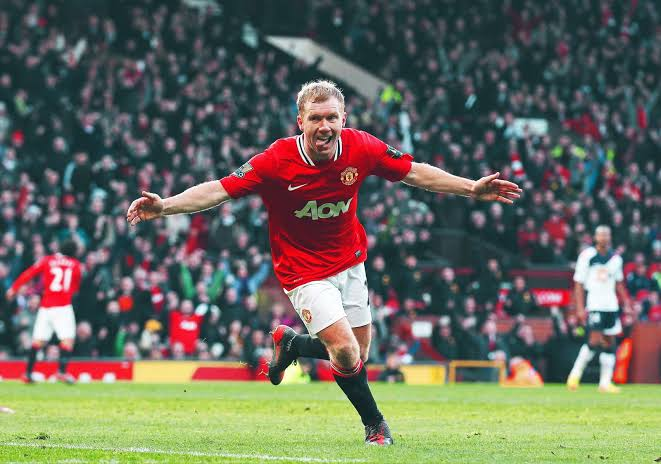
Scholes rarely needed to shout because his passing did the talking. He made 718 appearances and scored 154 goals, playing a central role across nearly two decades.
He could arrive late in the box, strike from distance or dictate a match from deep. His range of passing was like a player carrying several different tools in one kit bag.
Roy Keane: the standard setter
Keane made 480 appearances, scored 51 goals and won 16 trophies. His influence came from more than tackles and confrontations. He demanded concentration, courage and work from everyone around him.
As captain, he set a standard that could be felt before kick-off. Keane was the team’s competitive spine, particularly during the late 1990s and early 2000s.
Cristiano Ronaldo: the greatest export
Ronaldo’s first United spell produced 292 appearances and 118 goals between 2003 and 2009. He won nine major trophies, including three Premier League titles, the 2008 Champions League and the 2004 FA Cup.
He arrived as a skilful teenager and left as one of the world’s outstanding forwards. The transformation was dramatic, but it was also earned through relentless improvement. Ronaldo is the clearest example of a United player turning potential into global greatness.
9-12: The Spine of the Treble Winners
Peter Schmeichel: the wall
Schmeichel made 398 appearances and won 15 trophies. He was central to the 1999 treble-winning side, giving United authority behind an adventurous defence.
His saves were important, but so was his presence. Schmeichel filled the goal, organised his defenders and gave the team an aggressive first line of leadership.
Denis Law: the king
Denis Law scored 237 goals in 404 appearances. His movement, finishing and personality made him one of the defining forwards of United’s great 1960s side.
He missed the 1968 European Cup final through a knee injury, an absence that still forms part of the story around that historic victory. Law remains one of the club’s most natural goalscorers.
Bryan Robson: Captain Marvel
Robson made 461 appearances, scored 99 goals and won 10 major honours. His nickname was not exaggerated. He could drive forward, defend, score and carry responsibility when a match became uncomfortable.
He won three FA Cups and two Premier League titles. For many supporters, Robson remains United’s best all-round captain.
Nemanja Vidic: the warrior
Vidic made 300 appearances and won 15 trophies, including five Premier League titles and the 2008 Champions League.
He was built for physical contests. His partnership with Rio Ferdinand balanced aggression with calm distribution, creating one of the finest central-defensive pairings in Premier League history.
13-16: Defenders, Wingers and a Dutch Master
Rio Ferdinand: calm at the back
Ferdinand made 455 appearances for United. His defending was based on anticipation, positioning and composure rather than constant drama.
He could step into midfield with the ball and remain calm when opponents pressed. That calmness gave United’s attack a platform, especially during the club’s late-2000s success.
David Beckham: the best right foot of his generation
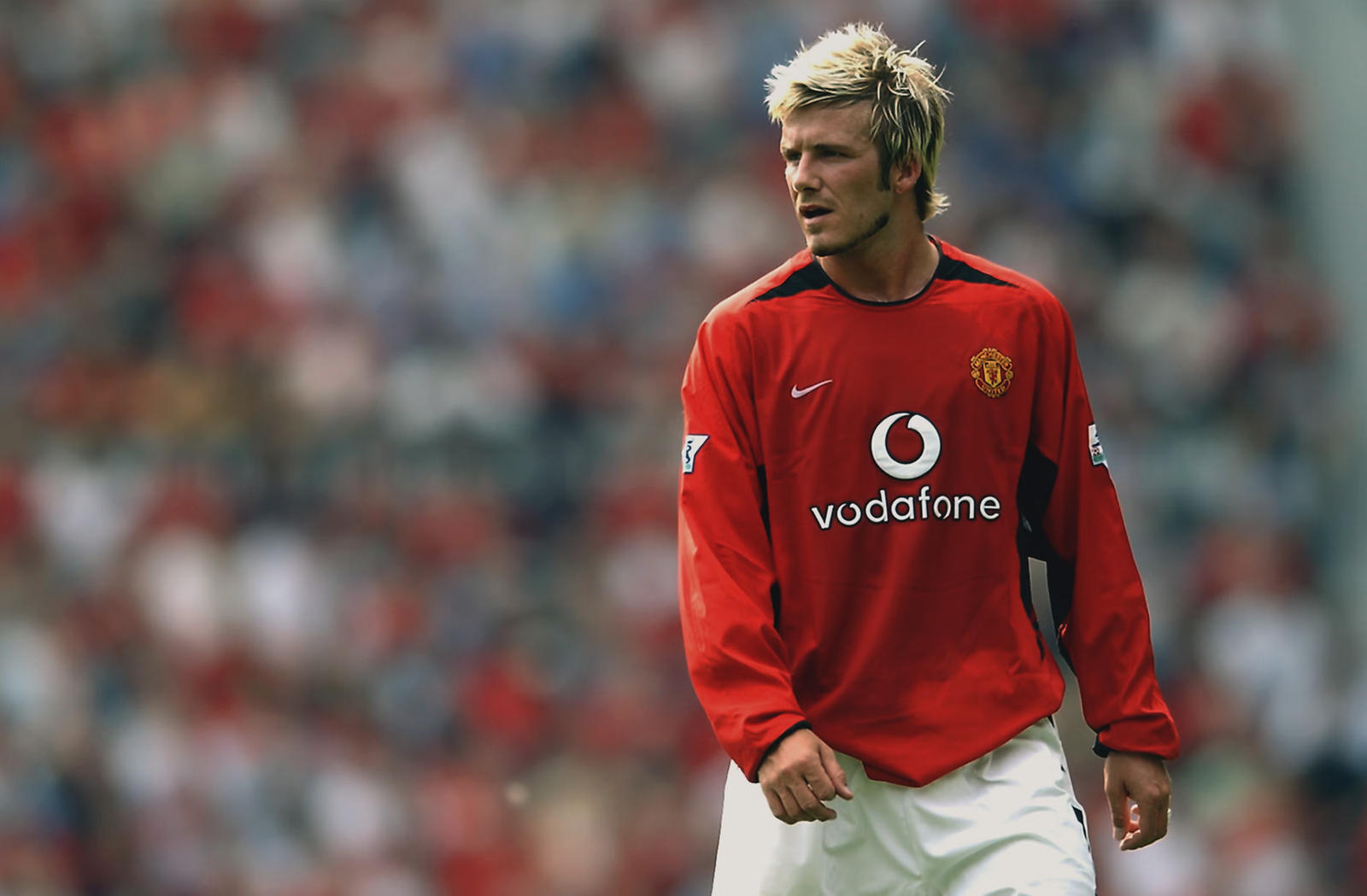
Beckham made 394 appearances, scored 85 goals and won 13 trophies. His crossing was so precise that it often looked rehearsed, even when it came under pressure.
He also worked hard, defended diligently and delivered important goals. His free-kick against Wimbledon became one of the defining images of the Premier League’s early years.
Ruud van Nistelrooy: the finisher
Van Nistelrooy scored 150 goals in 219 appearances. He was a penalty-box specialist with sharp movement and a ruthless first touch.
He won one Premier League title, one FA Cup and one League Cup with United.
His game was not built around unnecessary decoration. He found space, attacked the right areas and finished chances. In front of goal, he was as close to a guarantee as football allows.
Duncan Edwards: the greatest of the lost
Edwards made 177 appearances and scored 21 goals between 1952 and 1958. He won two league titles with United in 1955/56 and 1956/57.
He survived the Munich air disaster on 6 February 1958 but died from his injuries 15 days later.
He was only 21. That makes his place on this list difficult but necessary. His potential, performances and reputation among teammates suggest a player who could have become one of the greatest in the sport’s history.
17-20: Records, Keepers and a Modern Captain
David de Gea: the record keeper
De Gea made 545 appearances between 2011 and 2023 and kept 189 clean sheets, a club record for a goalkeeper.
He carried United through difficult periods with remarkable reflex saves. His best years were often about stopping matches from becoming defeats. That is a less glamorous job than scoring a winner, but it can be just as valuable.
Ole Gunnar Solskjaer: the man who won 1999
Solskjaer scored the winning goal in the 1999 Champions League final against Bayern Munich in the 93rd minute. That goal secured a 2–1 win and completed the treble.
He scored 18 goals across all competitions in the 1998/99 season, including 12 in the Premier League. His place here rests on timing, loyalty and one of the most important goals in United’s history.
Jack Rowley: the forgotten record breaker
Rowley scored 211 goals in 424 appearances and was United’s record goalscorer before Charlton surpassed him.
He played in a different age, when records were less visible and television coverage was far more limited. That should not make his achievement feel smaller. Rowley was a prolific forward who deserves more recognition whenever United’s history is discussed.
Bruno Fernandes: the modern heartbeat
Fernandes joined United in January 2020 and has scored over 100 goals for the club. He has also won the Sir Matt Busby Player of the Year award four times.
His influence has been immediate and sustained. He creates chances, takes responsibility and keeps asking for the ball when matches become difficult. His final ranking may rise, but he needs more trophies and longevity to challenge the players above him.
Table 2: Manchester United's 20 Greatest Players, The Full Ranking
| Rank | Player | Position | Appearances | Goals | Major trophies |
|---|---|---|---|---|---|
| 1 | Ryan Giggs | Winger/midfielder | 963 | 168 | 13 league titles, two Champions Leagues |
| 2 | Sir Bobby Charlton | Midfielder/forward | 758 | 249 | 1968 European Cup |
| 3 | George Best | Winger/forward | 470 | 179 | 1968 European Cup |
| 4 | Wayne Rooney | Forward | 559 | 253 | Premier League, cup and European honours |
| 5 | Eric Cantona | Forward | 185 | 82 | Eight trophies |
| 6 | Paul Scholes | Midfielder | 718 | 154 | |
| 7 | Roy Keane | Midfielder | 480 | 51 | 16 major |
| 8 | Cristiano Ronaldo | Winger/forward | 346 | 145 | 10 major trophies |
| 9 | Peter Schmeichel | Goalkeeper | 398 | - | 15 trophies |
| 10 | Denis Law | Forward | 404 | 237 | League and European honours |
| 11 | Bryan Robson | Midfielder | 461 | 99 | 10 major trophies |
| 12 | Nemanja Vidic | Defender | 300 | 21 | 15 trophies |
| 13 | Rio Ferdinand | Defender | 455 | 8 | Premier League and European honours |
| 14 | David Beckham | Midfielder | 394 | 85 | 13 trophies |
| 15 | Ruud van Nistelrooy | Forward | 219 | 150 | 1 league title, 1 FA Cup, 1 League Cup |
| 16 | Duncan Edwards | Midfielder | 177 | 21 | 2 league titles (1955/56, 1956/57) |
| 17 | David de Gea | Goalkeeper | 545 | - | Premier League and European honours |
| 18 | Ole Gunnar Solskjaer | Forward | 235 | 91 | 1999 Champions League |
| 19 | Jack Rowley | Forward | 424 | 211 | League and FA Cup honours |
| 20 | Bruno Fernandes | Midfielder | - | Over 100 goals for United | - |
Manchester United have won the European Cup/Champions League three times: 1968, 1999 and 2008.
*Cristiano Ronaldo’s figures refer to his first United spell, from 2003 to 2009. Some sources combine his two spells and therefore show higher career totals.
What the second table shows
The table shows why no single measure can decide the ranking. Giggs leads for longevity, Rooney leads for goals and Schmeichel stands among the greats without needing a goals column.
The missing figures are deliberate. It is better to leave a blank than to present a doubtful number as fact.
How to use it in an argument with your mates
Start with your definition of greatness. If you value longevity, Giggs has the strongest case. If you value peak talent, Best becomes difficult to beat. If you value leadership, Keane, Robson and Charlton enter the conversation immediately.
That is why these debates last. The answer changes depending on what you value most.
The Honourable Mentions
Unlucky to miss out
Bill Foulkes, Gary Neville, Denis Irwin, Andy Cole, Dwight Yorke, Edwin van der Sar, Mark Hughes, Nobby Stiles and Steve Bruce all have strong cases.
The 1999 team alone creates a selection problem. Yorke scored 29 goals in all competitions during the treble season, while Cole scored 24. Leaving them outside the top 20 is not a criticism of their peak; it reflects the extraordinary depth of United’s history.
The current squad knocking on the door
Marcus Rashford already has over 400 appearances and more than 130 goals for United. His longevity and impact make him one of the strongest modern candidates for future inclusion.
Other current players need more seasons, major honours and defining moments. A promising career is not the same as a completed legacy.
Which Manchester United Era Was the Best?
The Busby Babes versus the Class of 92
The Busby era produced brilliance, tragedy and rebuilding. Charlton, Best, Law and Edwards represent a team that helped place United at the centre of European football.
The Class of 92 generation delivered astonishing consistency. Giggs, Scholes, Beckham and the wider Ferguson teams kept winning across changing tactical and competitive landscapes.
Why the 1999 treble team stands alone
The 1999 team won the Premier League, FA Cup and Champions League in the same season. It also did so with late goals, comebacks and a sense that defeat was never final.
Other United teams may have had greater individual talent. Few matched that team’s combination of depth, resilience and silverware.
How the 2025/26 Season Changes the Debate
Carrick's third-place finish
Manchester United finished third in the 2025/26 Premier League with 71 points. They began the season under Ruben Amorim, who was dismissed in January, before Darren Fletcher took charge briefly as interim manager.
Michael Carrick then led the team for the rest of the season, secured Champions League qualification and signed a permanent contract until 2028. That third-place finish does not yet change the historical ranking, but it gives the current era a more positive reference point.
Where the current squad fits historically
The current squad cannot yet be compared seriously with the 1999 or 2008 teams. That is not an insult. History needs time.
Fernandes is the obvious exception because he has already passed 100 United goals and won the club’s player-of-the-year award four times. Even so, trophies and longevity will decide how high he eventually climbs.
Final Thoughts
The answer in one line
Ryan Giggs is my choice as Manchester United’s greatest player because he combined elite ability, incredible longevity, record appearances and unmatched success.
Why the debate still matters
The best Manchester United players did more than produce numbers. They gave supporters a language for different eras: Best brought magic, Charlton brought dignity, Cantona brought belief, Keane brought standards and Rooney brought relentless commitment.
A great player leaves statistics behind. A Manchester United great leaves memories that supporters keep using.
FAQs
Who is Manchester United’s all-time top goalscorer?
Wayne Rooney is Manchester United’s record goalscorer with 253 goals in 559 appearances. He passed Sir Bobby Charlton’s previous record of 249 goals with a late free-kick against Stoke City in January 2017.
Who has made the most appearances for Manchester United?
Ryan Giggs holds the club record with 963 competitive appearances between 1991 and 2014. He passed Charlton’s previous record of 758 appearances in May 2008.
Was George Best Manchester United’s most talented player?
Many supporters and former players consider Best the club’s most naturally gifted footballer. His dribbling, balance and creativity were exceptional. The main argument against ranking him first is the shorter length of his peak.
Who was Manchester United’s best captain?
Roy Keane and Bryan Robson are the strongest candidates. Keane brought relentless standards during the Ferguson era, while Robson combined leadership, goals and all-round midfield ability.
Who is the best Manchester United player of the Premier League era?
Ryan Giggs has the best overall case because of his 13 Premier League titles and 963 appearances. Eric Cantona, Wayne Rooney, Paul Scholes and Cristiano Ronaldo all have strong arguments depending on whether you value influence, goals or peak ability.
Which Manchester United team was the best ever?
The answer usually comes down to the 1998/99 treble winners or the 2007/08 Champions League-winning side. The 1999 team has the strongest trophy story, while the 2008 team combined defensive strength with outstanding individual quality.
Who is Manchester United’s greatest goalkeeper?
Peter Schmeichel is the traditional choice because of his 1990s dominance and role in the 1999 treble. David de Gea has an equally strong statistical case, holding the club record with 189 clean sheets.
How many European Cups or Champions Leagues have Manchester United won?
Manchester United have won the European Cup or Champions League three times: in 1968, 1999 and 2008.
Could Bruno Fernandes eventually enter the top ten?
Yes, but he needs more time and major trophies. Fernandes has already scored over 100 goals for United and won the Sir Matt Busby Player of the Year award four times. His final position will depend on how the rest of his career plays out.